Buyer's guide · 2026 · Affiliate disclosure
Best lab-grown diamond wedding & engagement rings in 2026
Five rings we'd actually put on a real finger — IGI-certified, honest carat weights, and prices that don't require a second mortgage. Emerald, oval, halo, and the one gold band worth wearing forever.
Disclosure: The product links below are Amazon affiliate links. If you buy through them, we earn a small commission — at no extra cost to you. We only feature rings we'd recommend to a friend.
Why lab-grown in 2026?
The math is embarrassing for mined diamonds now. A 2-carat, F-color, VS1-clarity mined stone runs $22,000+. The identical lab-grown stone — same carbon lattice, same IGI grading rubric, same sparkle — is $3,000–$4,500. That's not a discount, that's a category collapse. When 60% of engagement rings sold in 2026 are lab-grown, the "will people know?" question is dead. They will. Nobody cares.
What actually matters: the cert (IGI), the cut, and the setting. Skip any listing without an IGI or GIA report. The five below all pass.
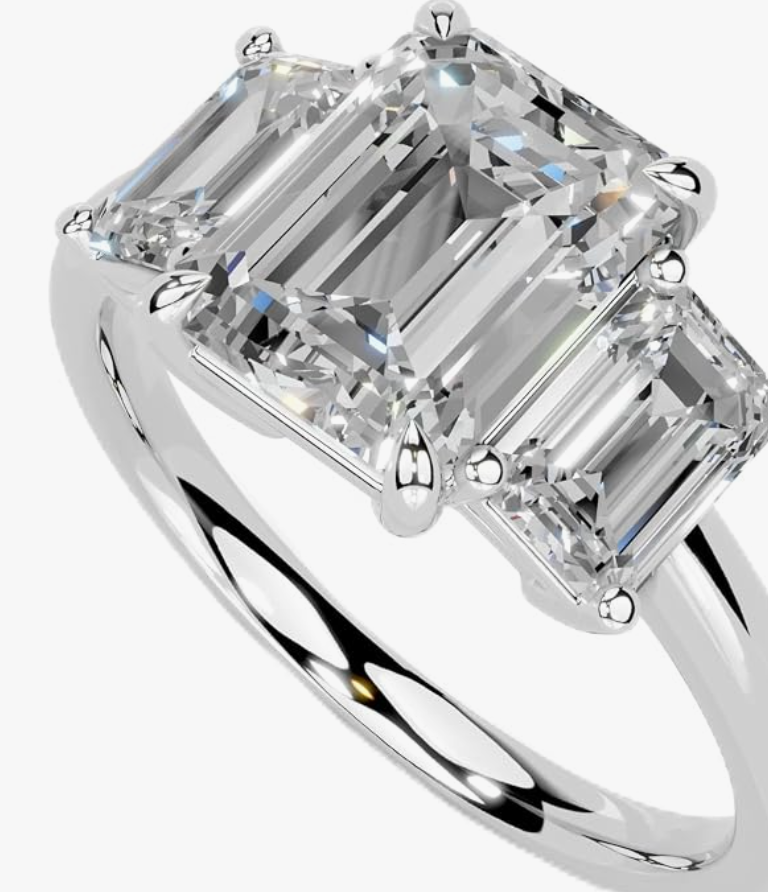
#1 · Best for the statement ring
Emerald Cut 3-Stone Lab Grown Diamond Ring (1–5 ct, F–G, VS1–VS2)
14K/18K gold or platinum · IGI Certified · 1–5 ct total
If you want the ring people notice from across the room, this is it. Emerald cut throws long, hall-of-mirrors light instead of glitter — more Art Deco, less shopping-mall. The three-stone layout adds visual width without pushing you into 3+ carat pricing on the center stone alone. Buy the 2 ct total-weight version and you'll get the presence of a 3 ct solitaire for roughly half the price.
- ✓ Emerald center stone with two side emeralds — the Meghan Markle silhouette
- ✓ F–G color (near-colorless), VS1–VS2 clarity (eye-clean)
- ✓ IGI certified with printed report — non-negotiable at this size
- ✓ Available in 14K, 18K, and platinum
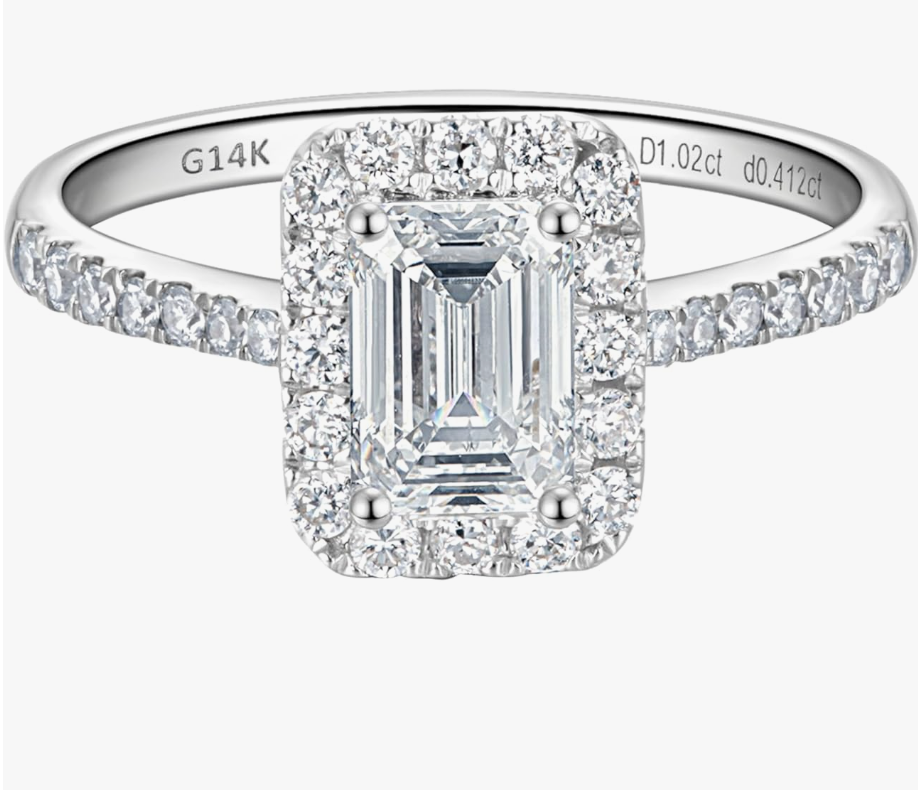
#2 · Best for looking 2× bigger than it is
Halo 14K White Gold Lab-Grown Engagement Ring (0.5–2.5 cttw)
14K white gold · IGI Certified · 0.5–2.5 cttw · D/E/F color
The single best value on this list. The halo is optical trickery in the best way — a 1 ct emerald or round center reads as nearly 2 ct because the accent halo blurs the boundary. Pair it with a colorless (D–F) center and you get a ring that photographs like something twice the price. This is the one to buy if your budget is $1,500–$3,500 and you want maximum visual impact.
- ✓ D–F color (colorless — the top tier), VS1–VS2 clarity
- ✓ Halo of accent stones makes a 1 ct center look like ~1.75 ct
- ✓ Pavé shank adds sparkle from every angle
- ✓ IGI cert on center stone
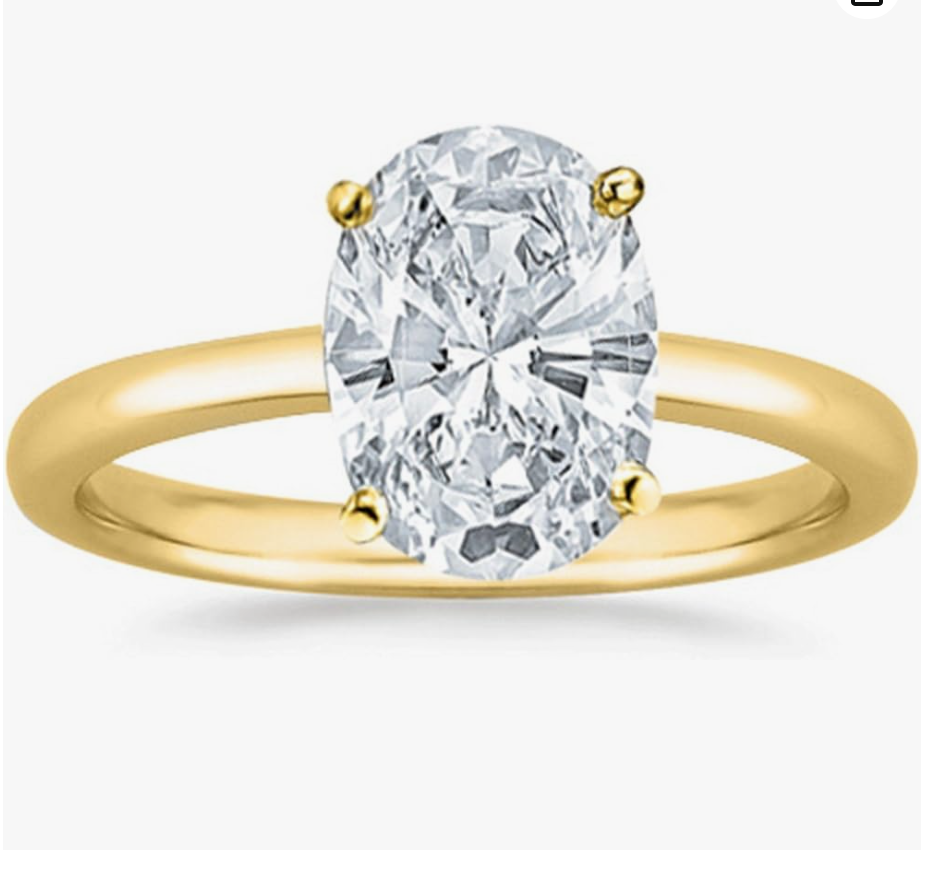
#3 · Best for the timeless choice
Houston Diamond District Oval Solitaire (1–5 ct, IGI Certified)
Yellow or white gold · IGI Certified · 1–5 ct · E–F color, VS2–SI1
Oval is the #1 selling engagement ring shape in 2026 for a reason — it looks bigger than a round of the same weight, elongates the finger, and works with literally any wedding band. Houston Diamond District is one of the few Amazon jewelers with a real brick-and-mortar behind them, and their IGI-certified stones consistently grade accurately. This is the 'you can't go wrong' pick.
- ✓ Oval cut — elongates the finger, most flattering shape for most hands
- ✓ E–F color (near-colorless top range)
- ✓ Classic 4-prong solitaire — will never look dated
- ✓ Houston Diamond District: legit US jeweler, been on Amazon 10+ years
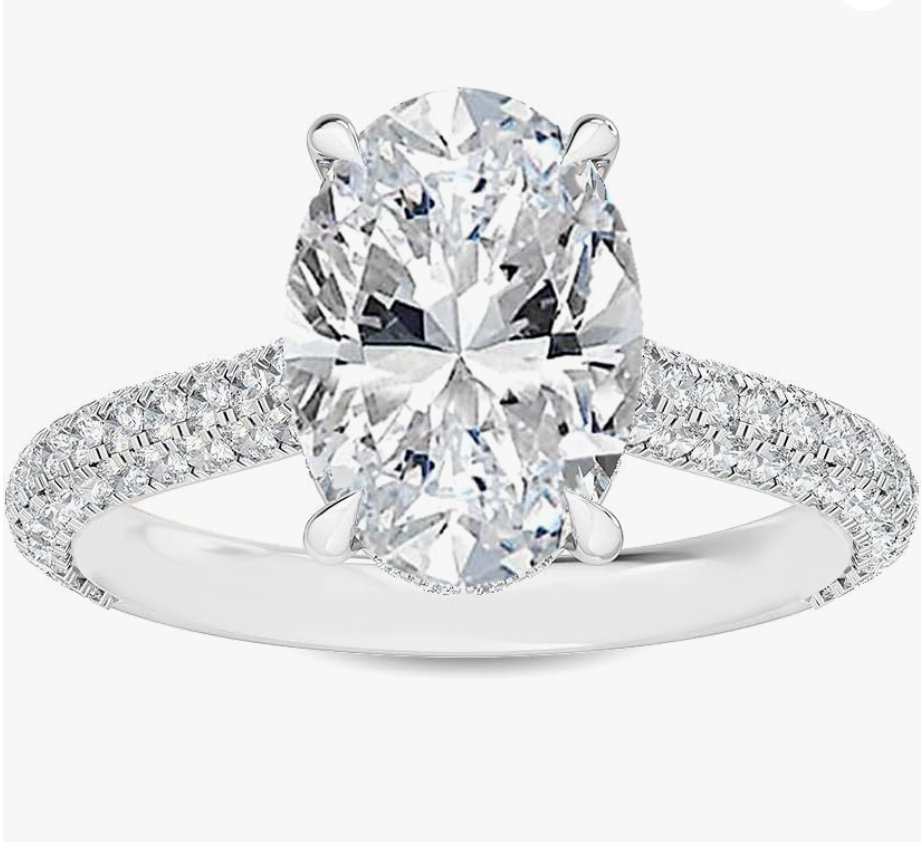
#4 · Best for the vintage lover
Houston Diamond District Oval Vintage Ring (1–5 ct, D–E, VS1–VS2)
White gold · IGI Certified · 1–5 ct · D–E color, VS1–VS2
Same reliable oval center stone as #3, but with a vintage-style band — pavé accents down the shank, delicate detailing that reads antique without looking fussy. If you love the idea of an heirloom ring but want a stone with modern clarity and ethics, this is the compromise that isn't a compromise. The D–E color grade is genuinely rare at this price point.
- ✓ D–E color — the absolute colorless top of the scale
- ✓ VS1–VS2 clarity — inclusions invisible to the naked eye
- ✓ Vintage-inspired pavé and milgrain band detailing
- ✓ Same trusted Houston Diamond District IGI-certified stones
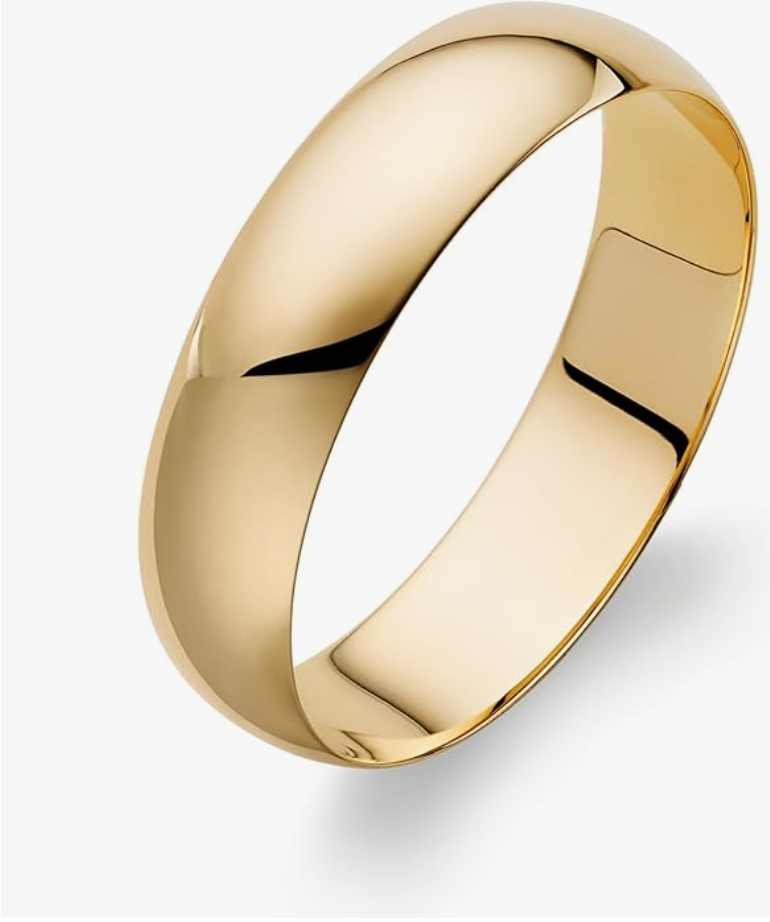
#5 · Best for the wedding band that outlasts trends
10K / 14K Gold 5mm Low Dome Classic Wedding Band
10K or 14K · Yellow or white gold · Sizes 7–14
This is the band. Not a trendy silicone thing, not a black tungsten thing that'll be embarrassing in 2032 — a solid gold, low-domed, 5mm band that your grandkids will find in a drawer and it'll still look right. Perfect for grooms, and quietly perfect as the wedding band paired with any of the engagement rings above. If you're stacking with a halo or three-stone, the 5mm width sits flush without competing.
- ✓ Solid 10K or 14K gold — not plated, not filled
- ✓ 5mm width, low dome — the exact profile grooms have worn for 100 years
- ✓ Classic fit (heavier, more substantial than comfort fit)
- ✓ Sizes 7–14 including half sizes
How to choose between them
| If you want… | Buy this |
|---|---|
| Maximum wow factor per dollar | The halo (#2) |
| Statement, Art Deco, "grown up" | Emerald three-stone (#1) |
| Classic that never dates | Oval solitaire (#3) |
| Vintage feel, modern stone | Oval vintage (#4) |
| The wedding band | Classic gold band (#5) |
Budgeting the ring inside the wedding
The old "two months' salary" rule was invented by De Beers in 1938. Ignore it. In 2026, the median engagement ring spend is $4,200 — and lab-grown means you can hit that number with a 2 ct stone that would've cost $20k mined. Plug your total wedding number into our free wedding budget calculator and the ring line auto-sizes to a healthy ~3% of total spend. If you're planning around a specific city, our Miami, NYC, and other 2026 cost guides break down what you'll actually spend on the rest.
FAQ
Are lab-grown diamonds real diamonds?
Yes. Chemically, optically, and physically identical — same carbon crystal, same 10 on the Mohs hardness scale, same fire. Even a jeweler can't tell them apart without specialized equipment. The FTC officially classified them as diamonds in 2018.
Will people know it's lab-grown?
Only if you tell them. There is no visible difference. And in 2026, roughly 60% of new engagement rings are lab-grown — nobody's shocked anymore.
What's IGI vs GIA?
Both are legitimate independent grading labs. IGI grades the majority of lab-grown diamonds and is the standard for the category. GIA is historically the mined-diamond gold standard and now grades lab-grown too. Either is fine — just make sure your stone has one.
Do lab-grown diamonds get cloudy?
No. This is a myth. A lab-grown diamond is a diamond — it doesn't degrade, cloud, yellow, or lose sparkle. What can happen (to any diamond) is that skin oils and soap build up on the stone and dull it. A 30-second soak in warm water with dish soap fixes it.
Once you've got the ring…
You still have the rest of a wedding to plan. Start with the 12-month planning timeline, then use our venue finder and AI seating chart maker — all free, no signup. When you're ready to put it all in one place, the planner dashboard handles vendors, budget, and timeline together.
Prices, availability, and specifications are set by Amazon and third-party sellers and change frequently — click through for current pricing. As an Amazon Associate we earn from qualifying purchases.
Recommended
The 5 lab-grown rings worth buying in 2026
Recommended
10 wedding dresses under $500 worth buying in 2026